
Turn assessment results into proof.
The case study template is designed to document real recovery outcomes once a participating shop completes an assessment and follow-up campaign.
The path from analysis to proof.
Assessment
Analyze customer export.
Report
Identify overdue customers.
Recovery
Run a follow-up batch.
Return Data
Compare next export.
Case Study
Publish proof.
Case Study: Anonymous Quick Lube Shop A
Use this format when the first real shop completes the assessment and recovery process.
| Section | What To Include |
|---|---|
| Shop Overview | Shop type, general region, monthly car count, software used, anonymized if needed. |
| The Problem | Customer list existed, but overdue customer revenue was not visible. |
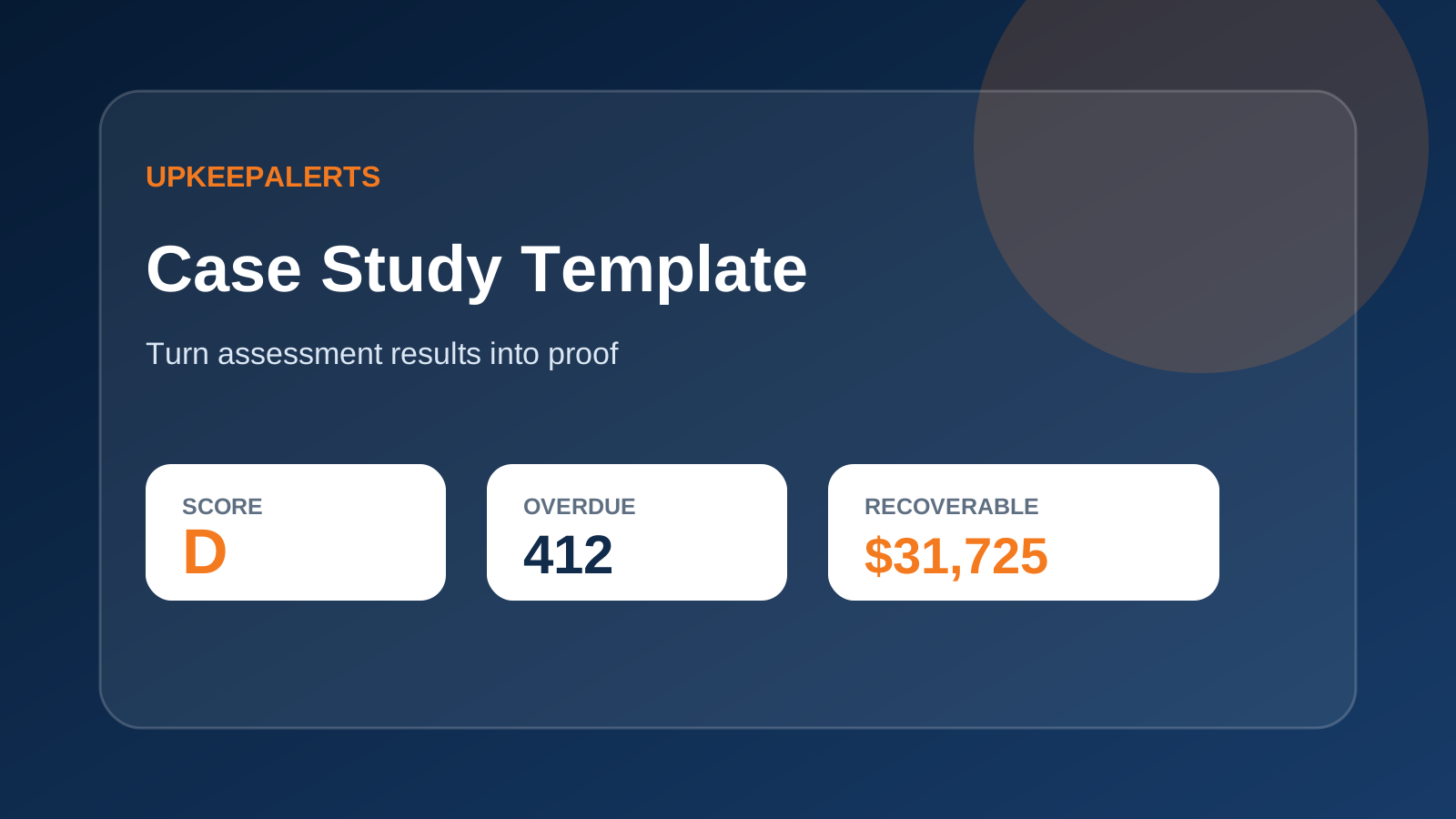
| Assessment Results | Revenue Recovery Score™, customers scanned, overdue customers, recoverable revenue estimate. |
| Opportunity Map™ | Customers segmented by 1–3 months, 3–6 months, and 6+ months overdue. |
| Recommended Action | First reminder batch or follow-up segment. |
| Results | Customers recovered, revenue recovered, time period, follow-up assumptions. |
| Key Takeaways | What the shop learned and how future recovery efforts should improve. |
What the first proof point could look like.
These numbers are examples only until a real participating shop provides data.
Example Case Study Metrics
Case Study Headline Formula
How an independent quick lube shop identified 412 overdue customers and recovered $4,200 in repeat-service revenue.
Case studies make the whole platform more believable.
The website can explain the framework. A case study proves that the framework can produce business value.
The first real case study should become the primary proof asset linked from the homepage, assessment page, and sales outreach.
Want your shop to become the first case study?
Start with a Free Revenue Recovery Assessment.